
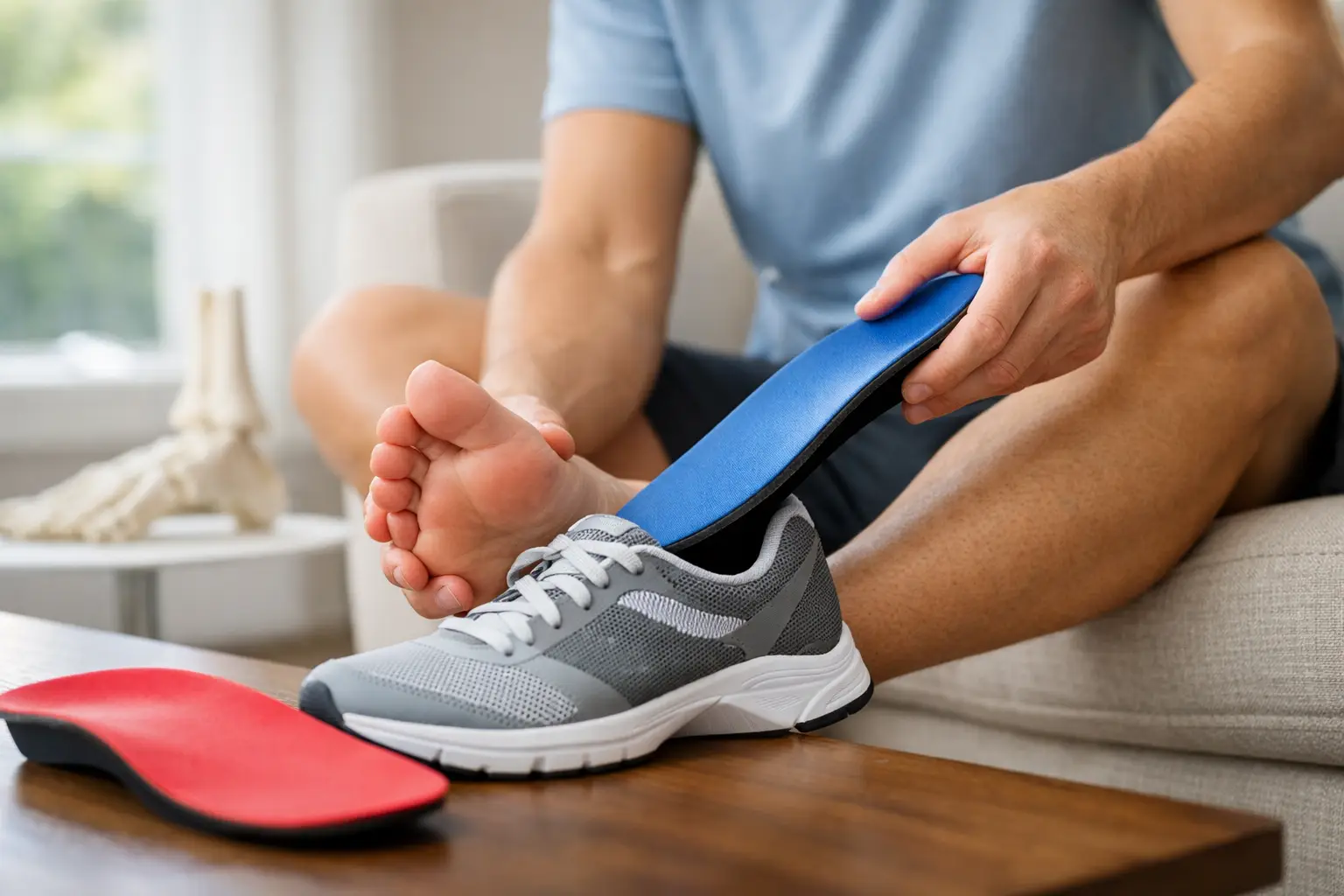
How Custom Orthotics Help With Foot Pain
A sharp heel pain on the first few steps of the morning. Aching arches after a full shift. A knee that starts bothering you halfway through a run. Foot pain rarely stays limited to the foot, especially when the way you stand, walk, work, or train keeps placing stress on the same tissues.
Custom orthotics foot pain care is not about putting a generic insert in every shoe and hoping for the best. The goal is to understand how your feet move, where they are being overloaded, and whether personalized support can make everyday movement more comfortable. For many people, orthotics are one useful part of a plan that also includes hands-on care, targeted exercise, footwear guidance, and a gradual return to the activities they enjoy.
What custom orthotics are designed to do
Custom orthotics are shoe inserts made to support your individual foot shape and movement needs. They are not simply softer insoles. Depending on the assessment, an orthotic may help redistribute pressure, support the arch, improve foot alignment, cushion sensitive areas, or limit excessive motion that is contributing to strain.
Your feet are the foundation for every step, squat, jump, and run. When a foot rolls inward too much, remains too rigid, or does not absorb force efficiently, the effects can travel upward. The ankle, shin, knee, hip, and lower back may all compensate. That does not mean every ache is caused by the feet, but it is a reason to look at the full movement picture rather than treating one painful spot in isolation.
A well-designed orthotic should feel purposeful, not dramatic. Some people notice a difference quickly, while others need a short adjustment period as their body adapts to a new level of support. The right device should work with a properly fitting shoe and your treatment goals, whether that means getting through work without aching feet or returning to a weekend running routine.
When custom orthotics can help foot pain
Orthotics may be recommended for several common sources of discomfort. Plantar fasciitis, often felt as heel or arch pain with early morning steps, is one example. By supporting the arch and reducing tension through the plantar fascia, orthotics may help make standing and walking more tolerable while the irritated tissue recovers.
They can also be helpful for pain beneath the ball of the foot, recurring arch fatigue, bunion-related pressure, certain tendon problems, and discomfort associated with flat feet or high arches. Runners may benefit when their foot mechanics are adding repeated stress to tissues during higher-volume training. People who stand for long shifts can benefit when pressure is concentrated in the same areas all day.
Still, foot pain is not automatically an orthotic problem. A recent injury, stress fracture, nerve irritation, inflammatory condition, infection, or significant loss of sensation needs the right clinical attention. Sudden severe pain, marked swelling, inability to bear weight, a changing foot shape, or a wound that is not healing should not be managed by simply buying new insoles.
The diagnosis matters more than the device
Two people can describe “arch pain” and need very different care. One may have plantar fascia irritation related to a sudden increase in walking. Another may have a tendon issue, limited ankle mobility, or pain referred from higher up the leg. An orthotic that helps one person may do very little for the other.
That is why an assessment should look beyond the outline of your foot. A clinician may examine your posture, walking pattern, footwear, ankle motion, strength, balance, areas of tenderness, training history, and daily demands. For active patients, a running assessment can add valuable information about how force is managed at speed.
Custom orthotics versus store-bought inserts
Over-the-counter inserts can be a sensible first step for mild, occasional discomfort. They are easy to access, less expensive, and may provide temporary cushioning or arch support. If your feet are tired after a long day and the problem resolves with rest, a quality prefabricated insert may be enough.
Custom orthotics are worth considering when pain is persistent, returns as soon as activity increases, affects work or sport, or is tied to a specific structural or movement issue. Their advantage is precision. The shape, material, posting, padding, and level of control can be selected around your needs rather than based on a standard shoe-size range.
There is also a trade-off. Custom devices cost more and work best when they are prescribed for a clear reason. More support is not always better. An overly rigid orthotic can feel uncomfortable, take up too much room in a shoe, or interfere with natural movement when the person does not need that level of control. The best choice is the least intrusive support that helps you move with less pain and more confidence.
Orthotics work best as part of a recovery plan
If a painful tissue has been overloaded for months, changing the support under your foot is helpful, but it may not be the only step needed. Muscles and tendons often need progressive strengthening. Joints may need improved mobility. Your walking, running, work setup, or training schedule may need temporary adjustments so the problem can settle.
For example, someone with plantar heel pain may benefit from an orthotic, calf and foot strengthening, mobility work, and a plan for gradually building walking or running volume. A runner with recurring shin pain may need support under the foot along with hip and calf strength work, cadence or training-load changes, and a review of worn-out footwear.
At Momentum Therapy, coordinated care can make this process more efficient. A physiotherapist, chiropractor, or other licensed clinician can assess the source of pain, recommend custom orthotics where appropriate, and build a treatment plan around your goals. That may include rehabilitation exercises, manual therapy, acupuncture, shockwave therapy for suitable conditions, or guidance on returning to activity safely.
What to expect from a custom orthotics assessment
The process begins with your story. When does the pain occur? Is it worse in the morning, after standing, or during exercise? What shoes do you wear most often? Have you recently changed your activity level, job demands, or training routine?
Your clinician will then assess your feet and the way the rest of your body contributes to movement. This may include observing you walk, checking joint range of motion, assessing muscle strength, and identifying tender or overloaded areas. The orthotic design should reflect what is found during this assessment, not just a foot impression or scan taken without context.
Once the orthotics are made, a fitting appointment confirms that they sit properly in your footwear and feel appropriate underfoot. Bring the shoes you wear most often, including work shoes, walking shoes, or running shoes if those are part of your concern. A device that feels good in a roomy sneaker may not fit well in a narrow dress shoe or a safety boot.
Getting used to your orthotics
Most people should not wear new orthotics all day on day one. Start with a shorter period, then increase wear time gradually over several days as comfort allows. Mild awareness of the support can be normal, particularly under the arch, but sharp pain, numbness, rubbing, or worsening symptoms are reasons to contact your provider for an adjustment.
Footwear matters just as much as the orthotic itself. Choose shoes with enough depth, a stable heel counter, and removable inserts when possible. Very worn shoes can undermine the support you are trying to add. If you are using orthotics for sport, ease back into higher-impact activity rather than testing them immediately on a long run or tournament day.
Custom orthotics can be a practical way to reduce strain, support recovery, and keep you moving toward the life and activities that matter to you. The most useful question is not “Do orthotics fix foot pain?” It is “What is causing my pain, and what combination of support and treatment will help me move better?” A focused assessment is the right place to start.