
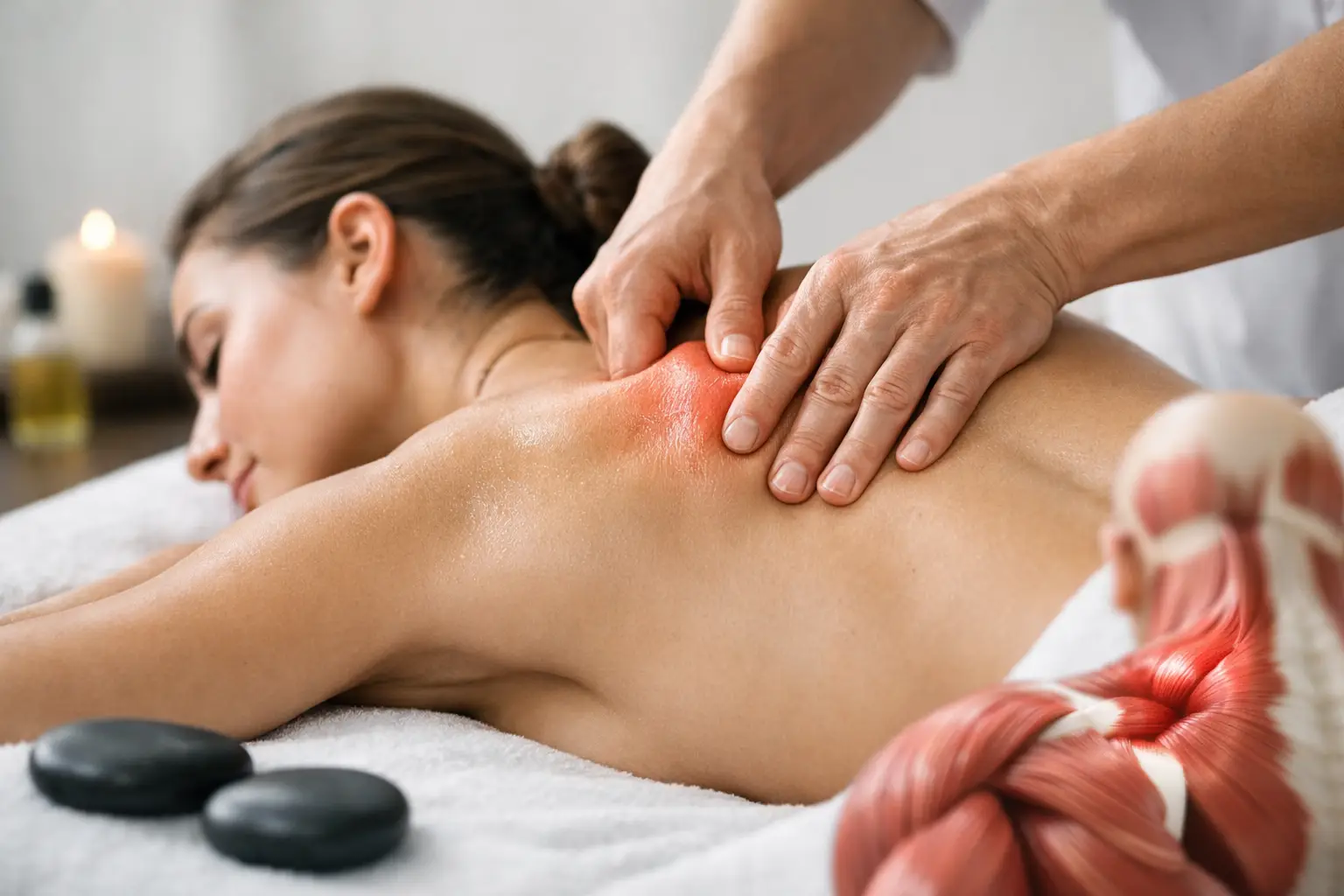
Does Massage Reduce Muscle Knots? What Helps
That hard, tender spot in your upper shoulder after a week at your desk, or the stubborn calf tightness after a run, can make every movement feel more difficult than it should. So, does massage reduce muscle knots? For many people, yes – massage can reduce the pain, tightness, and movement restriction associated with what people commonly call muscle knots. But the best results come from treating the reason the area became irritated, not simply pressing harder on the sore spot.
A registered massage therapist can assess how the affected tissue feels, how it responds to movement, and whether surrounding areas may be contributing. That personalized approach matters, especially when a “knot” keeps returning.
What people mean by a muscle knot
A muscle knot is not usually a literal knot tied inside the muscle. The term commonly describes a sensitive, tight area in a muscle or its surrounding connective tissue. It may feel like a small band, lump, or tender point, and pressure can sometimes reproduce pain locally or refer discomfort into another area.
These areas often develop when a muscle has been working harder than usual, recovering from an injury, held in one position for long periods, or compensating for limited movement elsewhere. Neck and shoulder tension from computer work, low-back tightness after lifting, and calf discomfort after increasing running mileage are all familiar examples.
Pain can also change the way you move. When you guard an uncomfortable area, nearby muscles may take on extra work. That is one reason a knot can feel better for a day, then return after the same work shift, workout, or poor night of sleep.
How massage can reduce muscle knots
Massage therapy can help through several overlapping effects. First, skilled hands-on treatment can decrease the feeling of stiffness and tenderness in an overactive muscle. Pressure, kneading, stretching, and movement-based techniques may calm the nervous system’s protective response to pain, helping the tissue feel less guarded.
Massage may also improve short-term range of motion. If turning your head, raising an arm, squatting, or running has become uncomfortable because a muscle feels tight, reducing sensitivity can make movement easier. This matters because comfortable movement is often part of longer-term recovery.
There is also a practical benefit: massage gives your therapist useful information. A tender upper-trapezius area may be related to workstation posture, stress, shoulder mechanics, or neck mobility. Recurrent hamstring tightness may be connected to training load, hip control, or a previous injury. Massage is often most effective when it is one part of a plan that addresses those contributors.
That said, massage does not permanently “break up” tissue or erase every tight spot in one appointment. Very aggressive pressure can leave an area more sore and sensitive, particularly if it is already irritated. More intensity is not always better. The right treatment dose depends on your symptoms, health history, activity demands, and how your body responds.
Relief can be immediate, but lasting change takes a plan
Many patients notice a lighter, looser feeling after massage. This can be valuable, whether you need to sleep more comfortably, return to normal daily movement, or prepare for a gradual return to sport. Yet if the knot is driven by repetitive strain, an abrupt jump in training, poor recovery, or weakness in another area, relief may be temporary without follow-up care.
For example, a runner with recurring calf knots may benefit from massage to settle tenderness, then a gradual review of mileage, footwear, ankle mobility, and calf strength. A professional with persistent shoulder tension may need treatment alongside regular movement breaks, changes to desk setup, and exercises that build upper-back endurance.
When massage helps most for tight, painful muscles
Massage is often a helpful option when muscle discomfort is linked to common overuse patterns, prolonged positioning, mild strains during recovery, or stress-related tension. It can be especially useful when pain is making you avoid movement, but you are otherwise able to use the area normally.
A treatment plan may include lighter relaxation-focused work, deeper work to a specific area, stretching, active movement, or home-care guidance. Your massage therapist should explain what they are treating and check in about pressure throughout the session. You should not feel like you have to tolerate sharp pain for treatment to work.
The timing matters, too. After a demanding workout, gentle massage may support relaxation and reduce the perception of soreness. Immediately after a significant acute injury with marked swelling, bruising, or severe pain, deep pressure is usually not the first step. An assessment can help determine what is appropriate.
What to do between massage appointments
The goal is not to spend the rest of the week hunting for the sore spot with a massage ball. Repeatedly digging into a painful area can aggravate it. Instead, use the improvement from treatment as an opportunity to move more comfortably and consistently.
Start with gentle motion that does not sharply increase symptoms. For a tight neck and shoulder, that might mean easy neck turns, shoulder blade movement, and brief walks away from your screen. For calves or thighs, easy walking and controlled mobility work may be more useful than long, forceful stretching.
Heat can feel soothing for chronic tension, while some people prefer a cool pack after a recent flare-up or exercise-related soreness. Neither option fixes the underlying cause on its own, but both can help make symptoms more manageable. Hydration, adequate sleep, and gradually progressing activity also support recovery, particularly for active adults balancing training, work, and family responsibilities.
If your therapist gives you exercises, consistency matters more than complexity. A few well-chosen movements performed regularly can do more for recurring muscle tightness than occasional intense self-massage.
When a muscle knot may need more than massage
A persistent painful spot is not always just a muscle problem. Joint irritation, nerve sensitivity, tendon issues, referred pain from the spine, and other conditions can feel similar. This is why an individual assessment is more useful than assuming every sore area needs deep tissue work.
Seek prompt medical attention for severe or rapidly worsening pain, significant swelling, redness or warmth with fever, unexplained weakness, numbness or tingling that is progressing, loss of coordination, or pain after a major fall or collision. Calf pain accompanied by one-sided swelling, warmth, redness, chest pain, or shortness of breath also needs urgent evaluation rather than massage.
For pain that is recurring, limiting work or sport, or not improving with reasonable self-care, coordinated treatment can make a meaningful difference. Massage therapy may work well alongside physiotherapy, chiropractic care, acupuncture, or a progressive rehabilitation program, depending on the assessment and your goals.
Does massage reduce muscle knots for athletes and desk workers?
It can, but the strategy looks different. Athletes often need help managing training load, restoring comfortable movement, and building capacity so a tight area does not become the weak link in performance. Desk workers may need relief from accumulated tension, but also practical ways to interrupt long periods of sitting and improve movement variety during the day.
In both cases, the question is not only “Where does it hurt?” but also “What keeps asking this tissue to do too much?” That is where one-on-one care becomes valuable. At Momentum Therapy, registered massage therapy can be integrated with rehabilitation guidance when your goal is to move with more confidence, return to activity, or stop a recurring issue from setting your schedule.
A muscle knot is your body’s signal to pay attention, not a reason to push through sharper pain. Start with an assessment, choose treatment that feels appropriate rather than punishing, and use the relief from massage to build healthier movement into the days that follow.