
Orthotics Versus Insoles: Which Is Right?
A long walk should not leave you changing how you move for the rest of the day. Yet many people try to solve heel pain, arch fatigue, shin discomfort, or aching knees with a shoe insert that looks promising on the shelf. When comparing orthotics versus insoles, the difference is not simply price or padding. It is about whether you need general comfort, targeted support, or a more complete plan for the way your body moves.
Both can have a place in healthy, comfortable footwear. The right choice depends on your symptoms, your activity, your shoes, and the underlying reason your feet are asking for help.
Orthotics Versus Insoles: The Key Difference
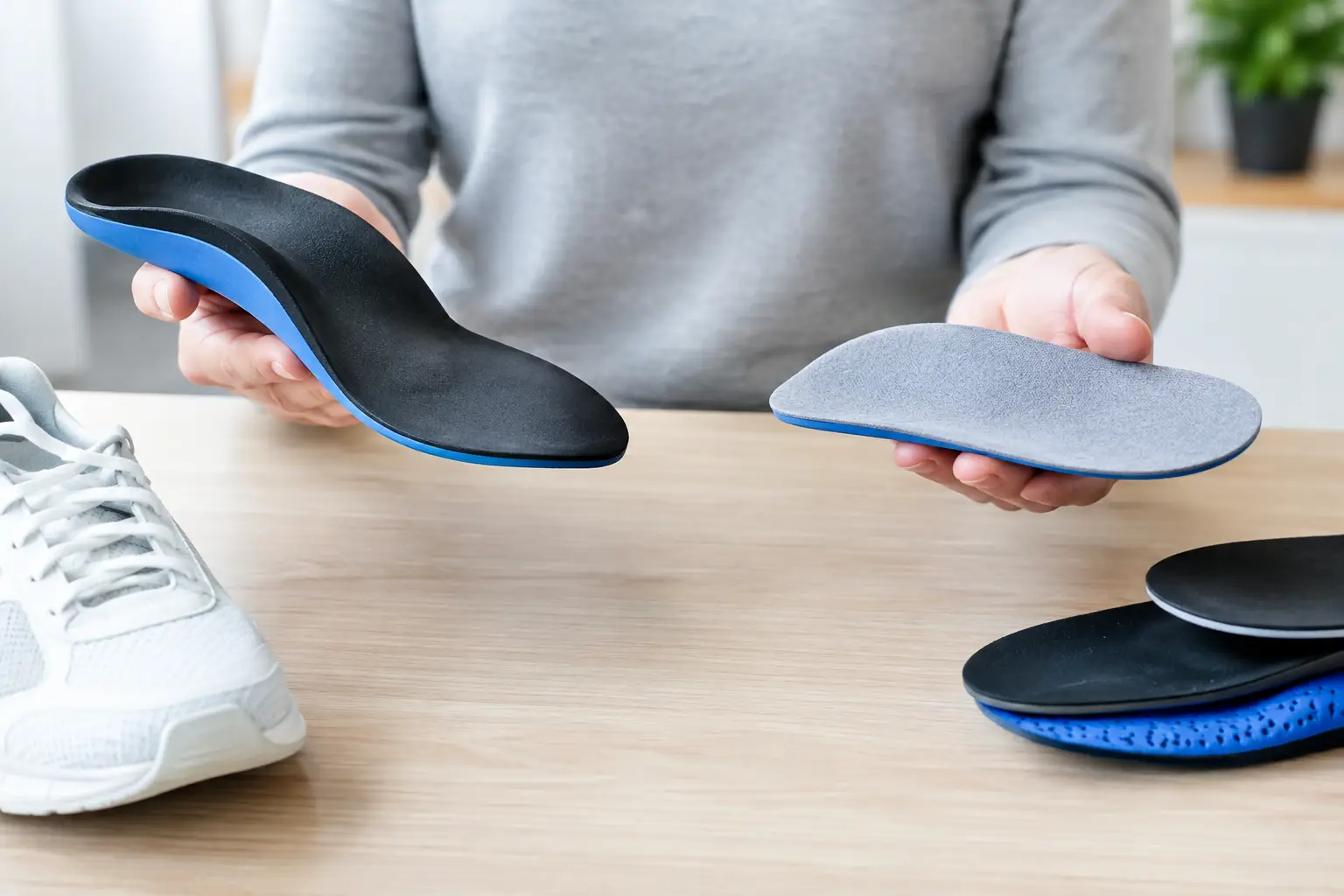
An insole is a ready-made insert placed inside a shoe. It may add cushioning, create a modest arch shape, reduce pressure under the heel or forefoot, or make a shoe feel more comfortable. Insoles are widely available and can be a practical first option for someone whose shoes have worn-out liners or who wants extra comfort during standing, walking, or casual exercise.
Orthotics are devices designed to influence foot position, support, pressure distribution, and movement. Custom orthotics are made using an assessment of your feet, footwear, walking pattern, symptoms, and functional needs. They are not simply molded arch supports. A well-designed orthotic is selected and shaped to address the specific loads and movement patterns contributing to a person’s discomfort.
That distinction matters because feet do not work in isolation. How your foot contacts the ground can affect the ankle, shin, knee, hip, and lower back. At the same time, pain higher in the body can change how you load your feet. The most useful solution is the one that fits the full picture, not just the outline of your arch.
When an Insole May Be Enough
A quality over-the-counter insole can be a sensible choice when the goal is comfort rather than correction. For example, you may benefit from an insole if your work shoes have thin, flattened liners, your new running shoes feel slightly firm, or your feet become tired after a longer-than-usual day on your feet.
Insoles can also be useful while breaking in supportive footwear or when you need a removable layer of cushioning for different shoes. People with no significant pain may find that a well-fitting insole improves comfort during travel, daily walks, gym sessions, or long shifts.
Fit still matters. An insole that is too thick can crowd the shoe and create rubbing, numbness, or pressure over the top of the foot. An arch that sits too far forward or back can feel irritating rather than supportive. If an insert makes your symptoms worse, do not assume you just need time to get used to it. Reassess the fit.
When Custom Orthotics Are Worth Considering
Custom orthotics are often considered when pain keeps returning, symptoms affect activity, or generic inserts have not provided enough relief. They may be appropriate for people with persistent plantar heel pain, recurrent forefoot pressure, arch pain, certain tendon-related concerns, or discomfort linked to a clear change in foot mechanics.
They can also help active adults and athletes who need support that matches a particular sport, shoe type, or training load. A runner may require a different approach than someone who spends eight hours standing at work. Likewise, an orthotic for a roomy walking shoe may not work well in a narrow dress shoe, hockey skate, or soccer cleat.
A custom device is not automatically better for every person. If your symptoms are mild and a well-chosen insole feels comfortable, that may be all you need. But when the issue is persistent, one-sided, worsening, or changing how you walk, an assessment can prevent months of trial and error.
What a Clinical Assessment Looks At
A proper orthotic assessment should look beyond the foot impression. Your clinician may assess joint mobility, strength, balance, footwear wear patterns, standing alignment, and how you walk or run. They will also ask about your injury history, work demands, training volume, and the locations and timing of your symptoms.
This process helps determine whether an orthotic is likely to help and what else should be part of the plan. Tight calf muscles, limited big-toe motion, weak hip control, a sudden increase in running mileage, or worn footwear can all contribute to foot pain. An orthotic may reduce strain, but mobility work, strengthening, gait guidance, and changes to activity can be equally important.
Support Is Not the Same as Cushioning
One common source of confusion is that soft does not always mean supportive. Some insoles feel excellent for the first few minutes because they are heavily padded, but they may compress quickly or do little to improve how pressure is distributed during a full day of walking.
Conversely, a custom orthotic may feel firmer because it is built to guide and support rather than act like a pillow. It should not cause sharp pain, numbness, or blisters. There can be a gradual adjustment period, especially if you have not worn structured support before, but comfort and function should improve over time.
The goal is not to force your foot into a perfectly shaped position. It is to provide the right amount of support for your body and your activity. Too much correction can be just as unhelpful as too little, particularly if it does not suit your natural movement or the shoes you wear.
Your Shoes Still Matter
Even the best insert cannot fully compensate for a poor shoe match. A shoe that is excessively worn, too narrow, too flexible for your needs, or unstable at the heel can limit the benefit of an insole or orthotic. Before buying a new device, look at the inside and outside of your shoes. Uneven outsole wear, a collapsed heel counter, or a visibly compressed liner may be telling you something.
Bring your most frequently worn shoes to an assessment when possible. The device needs to fit the footwear you actually use, not an idealized pair that stays in the closet. This is particularly important for runners, workers in safety footwear, and people who rotate between casual shoes, boots, and athletic footwear.
A Coordinated Plan Can Deliver Better Results
If foot pain is limiting your walks, training, work, or confidence, consider the bigger picture. A custom orthotic may be one valuable part of care, but it is rarely the whole answer. Physiotherapy, chiropractic care, running assessment, targeted exercise, and hands-on treatment may help address the mobility, strength, and loading issues behind recurring symptoms.
At Momentum Therapy, a custom orthotic assessment can be considered within a one-on-one plan that takes your goals seriously, whether you want to return to running, get through a workday more comfortably, or simply enjoy a walk without planning around pain. The focus is on finding practical support that works with your body and your daily life.
How to Make the Right Choice
Start with the problem you are trying to solve. If you want a little more comfort in otherwise supportive shoes, an insole may be a reasonable first step. Choose one that fits your shoe without crowding your toes, feels comfortable immediately, and does not increase symptoms after a few days of normal use.
If pain is recurring, interfering with activity, or traveling beyond the foot into the ankle, knee, hip, or back, move beyond guesswork. A clinical assessment can identify whether custom orthotics are appropriate, whether your footwear needs to change, and whether another treatment approach should be included.
Your feet carry you through every workout, commute, shift, and family outing. Giving them the right support is not about buying the most expensive insert. It is about choosing a solution that helps you move with less pain and more confidence.