
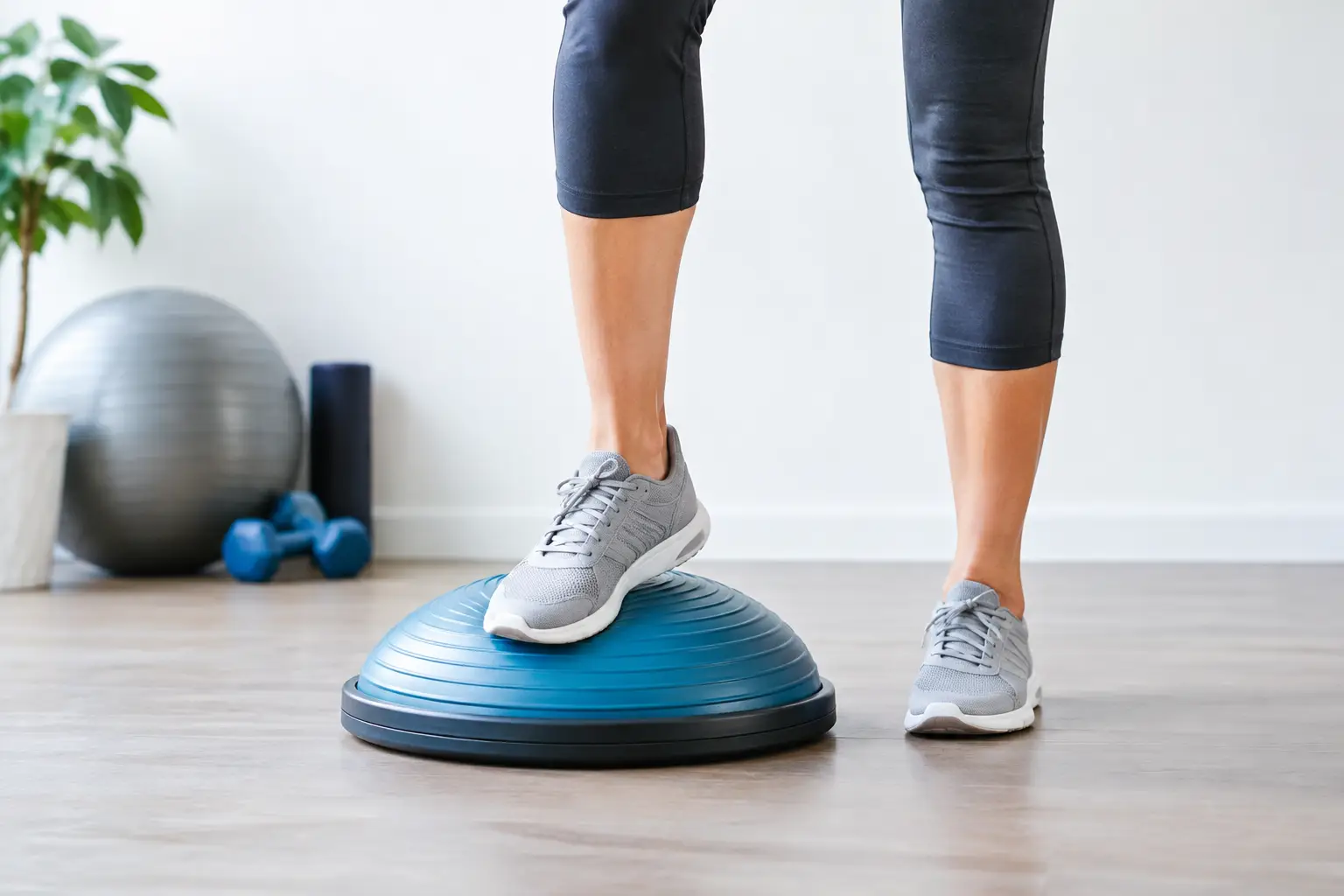
How to Improve Ankle Stability and Move Confidently
A quick pivot during pickleball, a misstep off a curb, or a run on uneven trails can expose an ankle that does not feel fully reliable. Learning how to improve ankle stability is not just about avoiding another sprain. It is about restoring confidence in everyday movement, sport, work, and the activities you enjoy.
Ankles need to be mobile enough to bend and adapt to the ground, but stable enough to control your body weight when you land, change direction, or balance on one leg. When that system is not working well, the ankle may feel wobbly, stiff, weak, painful, or prone to rolling outward. The good news is that targeted rehabilitation can improve control and function at almost any activity level.
Why ankle stability matters
Your ankle is supported by more than ligaments. The muscles of the foot, calf, shin, and hip all help control its position. Your nervous system also plays a central role by sensing joint position and reacting quickly when your foot meets an unexpected surface.
After an ankle sprain, the ligaments may heal but strength, balance, and reaction time can remain reduced. This is one reason people can experience repeat sprains months or even years after the original injury. Chronic ankle instability can also change the way you walk, squat, run, or climb stairs, placing extra stress on the knee, hip, and lower back.
Stability is not the same as stiffness. Some people try to protect an unsteady ankle by moving less or wearing a brace constantly. A brace can be useful during recovery or high-risk activity, but long-term progress usually comes from rebuilding movement, strength, and control rather than avoiding motion altogether.
How to improve ankle stability safely
The best plan depends on your injury history, current pain level, sport, footwear, and daily demands. A runner training for a race needs a different progression than someone who wants to feel secure walking their dog on icy sidewalks. Still, most effective programs build from mobility and basic strength toward balance, impact, and sport-specific movement.
Start with comfortable ankle mobility
A stiff ankle can make stability work harder. If the ankle cannot bend forward adequately, the body may compensate by turning the foot out, lifting the heel early, or collapsing the arch. Those patterns can affect squats, stairs, running, and landing mechanics.
A simple starting point is a knee-to-wall ankle motion drill. Stand facing a wall with one foot in front. Keeping the heel down and the knee tracking roughly over the second toe, gently move the knee toward the wall. Step the foot back slightly as your range improves. The movement should feel like a stretch or mild restriction, not sharp pain or pinching.
Calf tightness may also limit ankle motion. Controlled calf stretches with the knee straight and slightly bent can target different parts of the calf. If swelling, joint catching, or pain blocks movement, pushing harder is not the answer. A clinical assessment can help determine whether the restriction involves the joint, soft tissue, or an injury that needs more specific care.
Build strength from the foot upward
The small muscles in the feet provide a stable base, while the calf and lower-leg muscles guide the ankle through movement. Start with slow, controlled exercises before progressing to fast or high-impact drills.
Calf raises are one of the most valuable options. Begin with both feet, rising slowly onto the balls of the feet and lowering with control. Progress to single-leg raises when that feels comfortable. Quality matters: keep the heel moving straight up rather than letting it drift inward or outward.
Resistance-band movements can strengthen the muscles that pull the foot up, down, inward, and outward. The outward motion is particularly relevant for many people who repeatedly roll their ankle. Use a resistance level that allows smooth movement without gripping your toes, twisting your knee, or provoking pain.
Foot control deserves attention, too. Try gently shortening the foot by drawing the ball of the foot toward the heel without curling the toes. This can help you feel the arch muscles working. It may look subtle, but a stronger, more responsive foot can improve the platform your ankle relies on.
Train balance before testing it at speed
Balance training teaches the body to make small corrections before a loss of footing becomes a full ankle roll. Stand near a counter or wall for support, then practice balancing on one foot for 20 to 30 seconds. Keep the knee soft and let the foot make natural adjustments rather than locking the whole leg rigidly.
Once that is manageable, add challenge gradually. You might turn your head, reach one arm in different directions, stand on a folded towel, or perform a shallow single-leg squat. The goal is controlled difficulty, not dramatic wobbling. If the ankle feels painful, gives way, or remains swollen afterward, scale back.
For athletes, balance eventually needs to become dynamic. Stepping off a low surface, hopping in place, landing on one leg, and changing direction can be appropriate later-stage drills. These should come after you can walk, squat, and perform single-leg strength work with good control. Returning to cutting sports too early is a common reason ankle sprains recur.
Do not overlook the hips and core
Ankle stability starts at the ground, but it does not end there. Weakness or poor control at the hip can allow the knee to fall inward and the foot to collapse during single-leg tasks. That may make the ankle work in a less favorable position.
Exercises such as side-lying leg raises, bridges, step-downs, and controlled single-leg squats can support better lower-body alignment. You do not need complicated equipment to make progress. What matters is choosing exercises that match your current ability and performing them consistently.
A useful checkpoint is your knee position during a squat, step-down, or landing. It should generally track in line with the middle toes rather than drifting sharply inward. This is not about forcing perfect form on every repetition. It is about developing enough control to handle real-life movement when you are tired, distracted, or moving quickly.
Choose footwear and support strategically
Shoes cannot replace strength and balance training, but the right pair can make activity more comfortable and predictable. Worn-out soles, poor fit, and shoes that slide at the heel can reduce traction and make an unstable ankle feel worse. Match your footwear to the activity and surface whenever possible.
Some people benefit from a lace-up ankle brace during a return to sport, hiking, or other higher-risk activity. Bracing can provide external support and confidence while you rebuild capacity. It should be part of a plan, not the entire plan. If you feel dependent on a brace for normal walking, or if a brace causes pressure, numbness, or altered movement, seek personalized guidance.
Custom orthotics may also be helpful in certain cases, especially when foot mechanics, persistent pain, or recurrent symptoms are contributing factors. They are not automatically necessary for every ankle problem. A proper assessment should guide that decision.
Know when to get professional help
A mild ankle sprain may respond well to progressive exercise, but ongoing symptoms deserve attention. Book an assessment if you cannot bear weight comfortably, have significant swelling or bruising, notice numbness, hear a pop at the time of injury, or have pain directly over the bones of the ankle or foot. These signs may require further evaluation.
It is also worth seeking care if the ankle repeatedly gives way, remains stiff or swollen, or limits your return to running, work, or sport. A physiotherapist can assess mobility, ligament stability, strength, balance, walking or running mechanics, and the specific demands of your goals. Treatment may include hands-on therapy, tailored exercise progressions, running assessment, bracing recommendations, or coordinated care when other factors are involved.
At Momentum Therapy, individualized rehabilitation plans are built around what you want to get back to, whether that is pain-free walks, weekend soccer, lifting at the gym, or a stronger return to running. Small, consistent steps can make your ankle feel trustworthy again, and that confidence can change the way you move every day.