
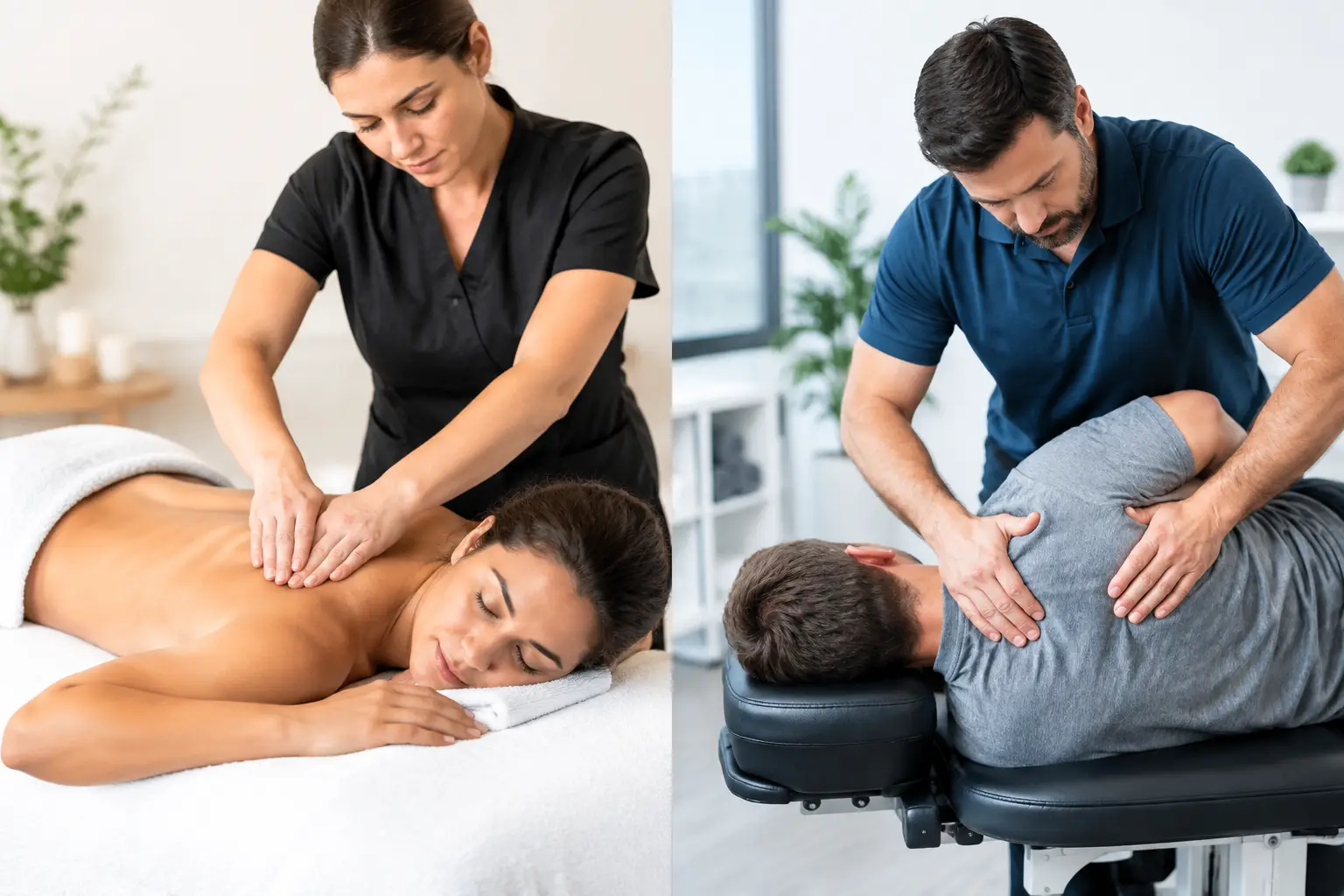
Massage Versus Chiropractic Treatment: Which Fits?
A stiff neck after a long week at your desk, low back pain after lifting, or a running injury can leave you asking the same practical question: massage versus chiropractic treatment – which one should you book? The best answer depends on what is driving your symptoms, how your body is moving, and what you want to return to doing.
Massage therapy and chiropractic care can both play a valuable role in easing discomfort and restoring function. They are not interchangeable, and neither is automatically the better choice. For many people, coordinated care delivers the most useful path forward because it addresses both tight or sensitive tissues and the joint, movement, or load-related factors behind recurring pain.
Massage Versus Chiropractic Treatment: The Main Difference
Registered massage therapy focuses primarily on the body’s soft tissues: muscles, tendons, fascia, and other structures that can become painful, guarded, overworked, or sensitive. A massage therapist uses hands-on techniques tailored to your comfort and goals. Treatment may include focused work on a sore area, broader relaxation-based care, or techniques intended to support mobility and recovery.
Chiropractic care focuses on assessing and treating musculoskeletal concerns, especially those involving the spine, joints, movement patterns, and nervous system-related symptoms such as radiating pain. Chiropractors may use joint mobilization or manipulation, soft-tissue techniques, exercise prescription, education, and activity modifications. Treatment should begin with a clinical assessment, not a one-size-fits-all adjustment.
Put simply, massage often feels most directly focused on muscle tension and recovery, while chiropractic care often centers on joint movement, mechanical patterns, and how those patterns affect pain and function. There is meaningful overlap. Both providers can assess movement, offer hands-on care, and help you build a plan for staying active safely.
When Massage Therapy May Be the Better Starting Point
Massage can be an excellent starting point when your main complaint feels muscular. You may notice knots through your upper back, calf tightness after training, sore glutes after a long drive, or general tension that builds during stressful weeks. It can also be useful when you are recovering from demanding activity and want to improve comfort without aggressive treatment.
People often choose massage for persistent shoulder and neck tension, tension-related headaches, exercise-related soreness, sleep-disrupting muscle discomfort, and stress that shows up physically. A skilled therapist can adjust pressure, pacing, and techniques to your tolerance. If deep pressure leaves you bracing or increases symptoms for days, more force is not necessarily more effective.
Massage is also a practical complement to rehabilitation. For example, a runner with a sore calf may benefit from hands-on treatment to settle symptoms, but long-term progress may also require a look at training volume, ankle mobility, footwear, running mechanics, and calf strength. Relief matters, but understanding why a problem returns matters too.
What a massage appointment can feel like
Your first visit should include a conversation about your symptoms, health history, daily activities, and goals. Treatment may be localized or full-body depending on the reason for your appointment. You may feel looser or calmer right away, although some tenderness after focused work can occur.
A good plan includes guidance for the hours and days after treatment. That may mean gentle movement, hydration, modifying a workout, or using simple exercises to maintain the gains from hands-on care.
When Chiropractic Care May Be the Better Starting Point
Chiropractic care may be particularly appropriate when pain seems connected to a joint, a change in movement, or a mechanical trigger. Examples include back pain when bending or standing from a chair, neck pain after sleeping awkwardly, stiffness that limits rotation, or a hip or rib area that feels restricted with certain movements.
A chiropractor can assess how you move, identify positions that aggravate or ease symptoms, and determine whether hands-on joint treatment, exercise, or a combination is appropriate. For some people, joint mobilization or manipulation can help reduce pain and improve motion in the short term. It is not a magic fix, and it works best as one part of a plan that includes movement and gradual return to normal activities.
Chiropractic care can also be helpful for active adults managing recurring back, neck, shoulder, hip, or extremity concerns. If you are dealing with discomfort during golf, strength training, cycling, or running, the assessment should consider your specific sport and the demands it places on your body.
What a chiropractic appointment can feel like
A thorough appointment should start with questions and a physical exam. Depending on your presentation, your chiropractor may assess posture, range of motion, strength, reflexes, joint function, and symptom behavior. Treatment might involve manual therapy, but it may also include targeted exercises, self-management strategies, and advice on returning to training or work tasks.
Some people feel immediate changes after manual treatment. Others improve more gradually as symptoms settle and movement confidence returns. The goal is not simply to keep chasing a temporary release. It is to help you move better, tolerate everyday demands, and have a clear plan when symptoms flare.
When Combining Massage and Chiropractic Care Makes Sense
You do not always need to choose one discipline. Massage and chiropractic care can work well together when both soft-tissue sensitivity and movement restrictions are contributing to the problem.
Consider someone with desk-related neck pain. Tight upper-back and neck muscles may respond well to massage, while a chiropractic assessment may identify limited upper-back movement, reduced neck control, or workstation habits that keep reloading the area. Another example is a recreational athlete with low back discomfort. Massage may help calm protective muscle guarding, while chiropractic treatment and exercise can address mobility, strength, and return-to-sport progression.
The order depends on your presentation. Some people prefer massage first because it helps them relax before joint work. Others benefit from chiropractic treatment first, then massage to address remaining muscular tension. A coordinated clinic can make that decision more straightforward because providers can share the same goal: helping you return to the activities that matter to you.
How to Choose the Right Care for Your Symptoms
Start with the quality and pattern of your pain, not just the label of the treatment. If your discomfort is widespread, stress-related, or clearly muscular after activity, massage may be a sensible first appointment. If pain is triggered by a specific movement, involves a feeling of joint stiffness, or keeps returning despite rest and stretching, chiropractic assessment may offer more direction.
Your preference matters too. Some people want a calming, recovery-focused session. Others want a detailed movement assessment and a structured exercise plan. Tell your provider what has and has not worked before, how active you want to be, and whether you have a deadline such as a race, tournament, trip, or return to work.
A qualified provider should be comfortable referring or coordinating care when another service is a better fit. Persistent pain may benefit from physiotherapy-based rehabilitation. Foot, knee, hip, or running-related concerns may call for a running assessment or orthotics evaluation. The right recommendation should follow your goals and assessment findings, not a predetermined treatment package.
Do Not Ignore These Warning Signs
Most muscle and joint pain is not an emergency, but certain symptoms need prompt medical assessment rather than massage or chiropractic treatment. Seek urgent care for new bowel or bladder changes, numbness in the saddle area, rapidly worsening weakness, severe pain after significant trauma, unexplained fever, or unexplained weight loss with persistent pain.
You should also get assessed promptly for sudden severe headache, new dizziness with neurological symptoms, chest pain, shortness of breath, or pain that feels distinctly different from your usual muscle or joint discomfort. Hands-on treatment is most effective when it is appropriate and safe for the condition being treated.
Make Treatment Part of Your Return to Movement
The most productive question is rarely, “Which treatment is better?” A better question is, “What does my body need to recover and stay active?” That may be massage, chiropractic care, exercise-based rehabilitation, or a thoughtful combination.
At Momentum Therapy, licensed providers can coordinate care around your symptoms, lifestyle, and recovery goals. Whether you are managing a stubborn work-related ache, recovering from a sports injury, or trying to move with more confidence, a personalized assessment can turn uncertainty into a practical next step. Today it hurts, but with the right plan and consistent progress, tomorrow can work better.