
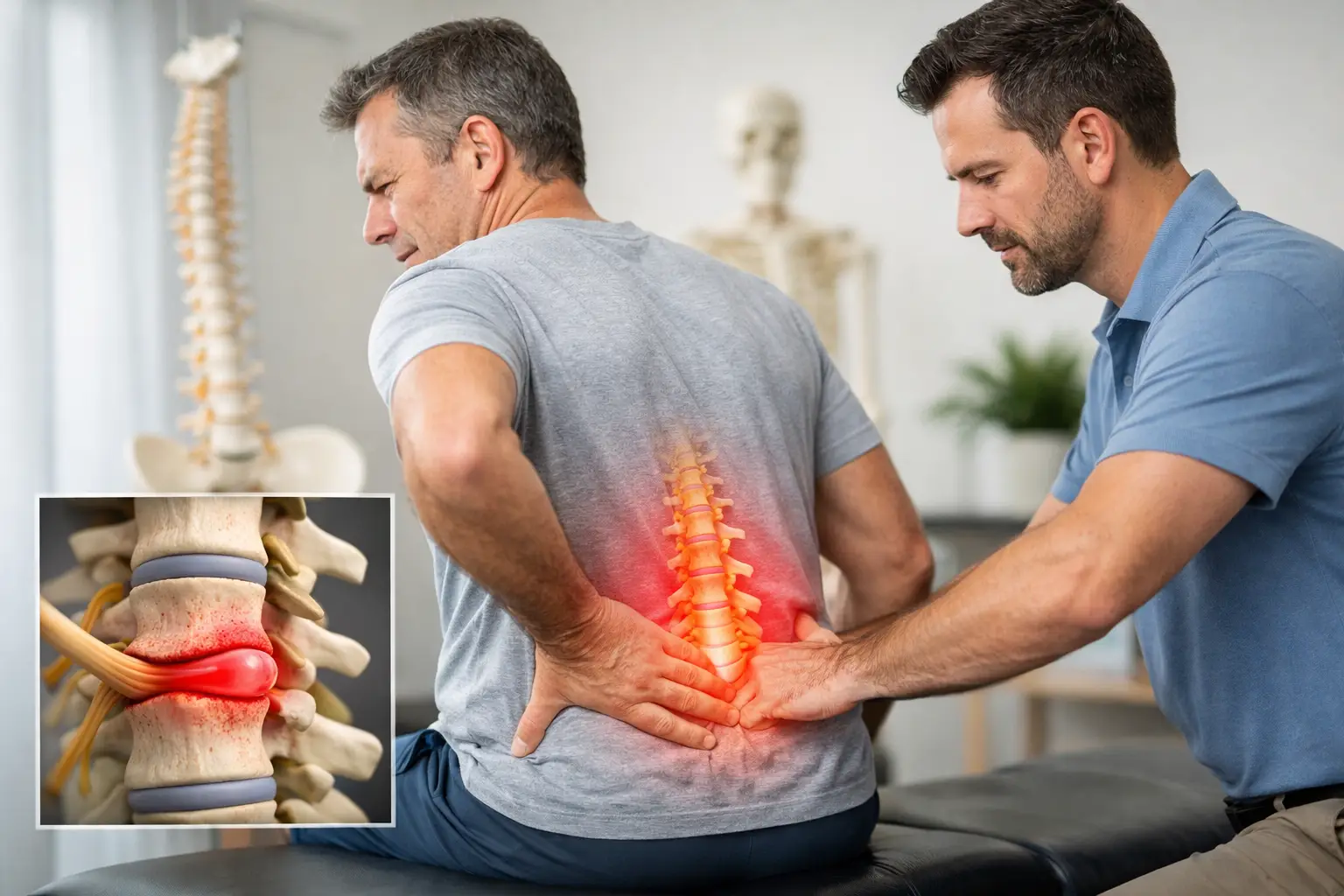
Can Chiropractic for Disc Herniation Help?
A disc herniation can make ordinary movements feel anything but ordinary. Getting out of the car, sitting through a meeting, bending to pick up a child, or returning to a run may trigger sharp back or neck pain, stiffness, tingling, or pain that travels into an arm or leg. Chiropractic for disc herniation can be a helpful part of conservative care for some people, but the right approach depends on your symptoms, examination findings, and stage of recovery.
The goal is not to “push a disc back into place.” A thoughtful treatment plan aims to reduce irritation, restore comfortable movement, improve strength and control, and help you return to the activities that matter to you with more confidence.
What a disc herniation actually means
Spinal discs sit between the bones of the spine. They have a tougher outer layer and a softer inner material, helping the spine absorb load and move smoothly. A disc herniation occurs when the inner material extends through or beyond the outer layer. This may irritate nearby tissues or place pressure on a nerve.
Not every disc herniation causes pain. In fact, imaging can show disc changes in people who have no symptoms at all. That is why an MRI or X-ray result should never be interpreted in isolation. Your symptoms, strength, reflexes, sensation, movement tolerance, work demands, and activity goals all matter.
In the low back, a herniation may cause pain into the buttock, thigh, calf, or foot, often called sciatica. In the neck, symptoms can travel into the shoulder, arm, or hand. Some people mainly feel localized stiffness or back pain, while others notice numbness, tingling, or weakness.
When chiropractic for disc herniation may help
For many people without serious warning signs, conservative care is a sensible first step. Chiropractic treatment may help manage pain and movement restrictions while supporting a gradual return to daily activity. The best care is individualized, not a one-size-fits-all series of adjustments.
A chiropractor begins with a detailed history and physical assessment. They will look at how you move, which positions change your symptoms, whether there are signs of nerve involvement, and how the issue is affecting sleep, work, sport, and home life. This assessment helps determine whether chiropractic care is appropriate and which techniques are suitable.
Treatment may include gentle hands-on therapy, joint mobilization or manipulation when indicated, soft-tissue techniques, movement education, and specific exercise. Some patients benefit from a directional-preference approach, such as McKenzie Method mechanical diagnosis and therapy, where repeated movements are used to identify positions that reduce or centralize symptoms.
There is an important trade-off here: more force is not automatically better. During an acute flare-up, a person may need gentler techniques, pacing advice, and carefully selected movements rather than aggressive treatment. As symptoms settle, the focus can shift toward rebuilding mobility, strength, and tolerance for lifting, sitting, running, or other meaningful tasks.
The aim is better function, not passive care forever
Hands-on care can provide short-term symptom relief for some people. But recovery is usually stronger when it is paired with active rehabilitation. Your plan may include exercises for trunk endurance, hip strength, spinal mobility, walking tolerance, and safer movement strategies for your specific job or sport.
If sitting worsens your symptoms, the plan might address workstation habits, movement breaks, and positions that calm the leg pain. If you are an athlete, your program should also consider training load, running mechanics, lifting technique, and a staged return to performance. The right plan meets you where you are, then progresses as your capacity improves.
What to expect at your first visit
A good first appointment should feel thorough, clear, and collaborative. You should have the opportunity to explain when symptoms began, what makes them better or worse, what treatment you have already tried, and what you need to get back to doing.
Your chiropractor may assess spinal motion, muscle strength, sensation, reflexes, balance, and nerve tension. They may also screen the hips and other areas that can contribute to pain patterns. If imaging is already available, it can be reviewed in the context of your examination. Imaging is not always necessary right away, particularly when symptoms and examination findings point toward a straightforward mechanical issue.
Before treatment begins, you should understand the working diagnosis, proposed approach, expected benefits, potential risks, and what improvement may realistically look like. Some people notice a change quickly. Others improve gradually over several weeks. Symptoms can fluctuate during recovery, especially as you return to normal activity, so progress is better measured by the overall trend than by one difficult day.
When chiropractic care is not the first step
Disc-related symptoms deserve prompt medical assessment when there are red flags. Seek urgent medical attention for new or worsening bowel or bladder control problems, numbness in the groin or inner thighs, rapidly progressing weakness, significant loss of coordination, fever with severe spinal pain, or pain following a major trauma.
New weakness in the foot, hand, or leg also needs timely evaluation. For example, difficulty lifting the front of your foot, repeated tripping, or a suddenly weaker grip should not be treated as routine soreness. A chiropractor can help identify when referral is needed and coordinate care appropriately.
Chiropractic treatment may also need to be modified or postponed depending on your medical history, bone health, medications, recent surgery, or severity of neurological symptoms. This is not a failure of conservative care. It is good clinical judgment.
Why coordinated care can make a difference
A disc herniation rarely affects only one part of life. Pain can disrupt sleep, concentration, exercise, work, and mood. That is why a multidisciplinary plan can be valuable when progress is more complex or when you need support beyond one treatment style.
At Momentum Therapy, chiropractic care can be coordinated with physiotherapy, massage therapy, acupuncture, and an individualized rehabilitation program when appropriate. For a runner, that might mean addressing spinal symptoms while also assessing lower-body strength and training volume. For a working professional, it may mean combining treatment with practical strategies for commuting, desk setup, and building tolerance for long days.
The advantage is continuity. Your providers can work toward the same functional goals rather than offering disconnected advice. You remain an active participant in the plan, with clear guidance on what to do between visits and how to progress safely.
Daily habits that support recovery
Rest can be useful for a brief period when pain is intense, but prolonged inactivity often makes the body more sensitive and deconditioned. In most cases, gentle movement within your tolerance is more helpful than waiting for every symptom to disappear.
Short walks, frequent position changes, and prescribed exercises can help maintain circulation and confidence in movement. Avoid repeatedly testing painful motions or forcing deep stretches into leg or arm symptoms. If an activity consistently sends pain farther down the limb, causes numbness to increase, or leaves you substantially worse afterward, it likely needs to be modified.
Good recovery also includes managing load. That may mean temporarily reducing heavy lifting, long car rides, high-impact training, or repetitive bending, then reintroducing those demands in a planned way. The goal is not to avoid movement forever. It is to build the capacity to handle it again.
A practical path forward
A disc herniation can feel alarming, especially when pain travels into an arm or leg. Yet many people improve with the right assessment, conservative treatment, and a progressive return to activity. The most useful plan is one that respects your symptoms without making you afraid of movement.
If back or neck pain is limiting your life, start with a proper assessment rather than guessing from an online scan report or trying to push through. With informed care, clear next steps, and steady progression, today’s painful movement can become tomorrow’s proof of recovery.