
Does Chiropractic Help Knee Pain? What to Know
A knee that aches on the stairs, catches during a squat, or swells after a weekend run can quickly change how you move through the day. So, does chiropractic help knee pain? For many people, it can be a useful part of a broader treatment plan, especially when pain is connected to movement mechanics, joint stiffness, muscle imbalance, or an injury affecting the hip, ankle, or foot.
Chiropractic care is not a one-size-fits-all answer for every knee problem. The right approach starts with understanding why your knee hurts, what activities trigger it, and whether another provider or diagnostic assessment is needed. A careful assessment can help identify a plan that reduces irritation while helping you move with more confidence.
When chiropractic may help knee pain
Your knee does not work alone. Every step, squat, jump, and turn requires coordination between the foot and ankle below it and the hip and pelvis above it. If any of these areas lack mobility, stability, or strength, the knee may have to absorb more stress than it was designed to handle.
Chiropractic treatment may help when knee pain is influenced by restricted joint motion, altered gait, poor lower-body mechanics, or tension in surrounding muscles and soft tissues. A chiropractor may assess the knee itself while also looking at how your hips, ankles, feet, and low back contribute to the problem.
For example, a runner with pain around the front of the knee may have limited ankle mobility or reduced hip control. A working professional with knee stiffness after long periods of sitting may also have tight hip flexors and reduced movement through the lower back. Treating the whole movement pattern can be more helpful than focusing only on the painful spot.
What chiropractic treatment for knee pain can include
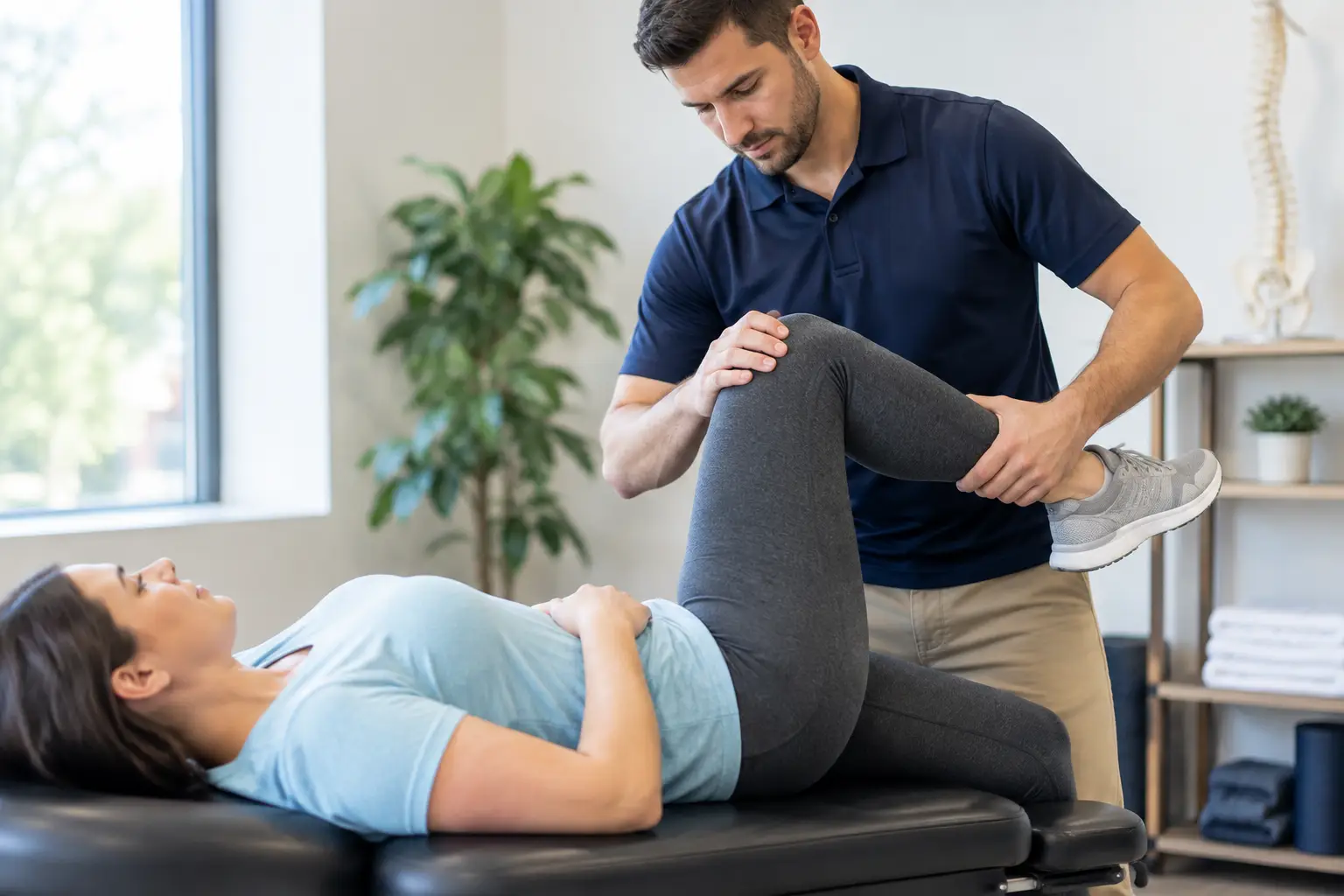
Chiropractic care is more than an adjustment. Depending on your assessment and comfort level, treatment may combine hands-on care with practical rehabilitation strategies designed around your goals.
Manual therapy may be used to improve movement in the knee, hip, ankle, or surrounding joints. This can include joint mobilization, soft-tissue techniques, and, when appropriate, chiropractic adjustments. The goal is not to force a joint into place. It is to reduce restrictions that may be contributing to pain or inefficient movement.
Your chiropractor may also prescribe specific exercises. These often focus on strengthening the quadriceps, hamstrings, glutes, calves, and core, while improving balance and control during activities that matter to you. A runner may work on single-leg stability and cadence. Someone recovering from a knee strain may begin with controlled range-of-motion and gradual loading before returning to stairs, recreational sports, or longer walks.
Education is another valuable part of care. Small changes to training volume, lifting technique, footwear, workstation habits, or recovery routines can make a meaningful difference. If your knee becomes sore after every pickleball match, the solution may not be to stop playing forever. It may be a temporary adjustment to frequency, warm-up, strength work, or how quickly you increase intensity.
Which types of knee pain may respond well?
The answer depends on the diagnosis, how long symptoms have been present, and your medical history. Chiropractic care may be considered for common musculoskeletal concerns such as patellofemoral pain, often felt at the front of the knee; mild osteoarthritis-related stiffness; tendon irritation; overuse pain; and some sprains or strains after an appropriate examination.
It may also support recovery after a sports injury-in-sports-injury-rehabilitation/) once serious damage has been ruled out or managed. A clinician can help you rebuild strength, mobility, and trust in the joint after the initial pain and swelling settle.
People with knee osteoarthritis sometimes benefit from a combination of gentle manual therapy, mobility work, strengthening, and activity modification. Care cannot reverse arthritis or regrow cartilage, and it should never be presented that way. It can, however, help some people manage stiffness, improve function, and stay active with less discomfort.
The role of the hips, feet, and ankles
Knee pain often has a local component, but the source of excessive load is not always local. Feet that roll inward excessively, limited ankle dorsiflexion, weak hip muscles, or poor control during single-leg movement can all affect how force travels through the knee.
This is why a thorough assessment matters. If a patient is repeatedly dealing with knee pain during running, a running assessment or discussion of footwear, training progression, and custom orthotics may be appropriate in some cases. Orthotics are not necessary for everyone, but they can be one tool when foot mechanics are clearly contributing to symptoms.
When chiropractic is not enough on its own
Knee pain deserves prompt medical attention when it follows a significant fall, twist, collision, or other trauma. Seek urgent assessment if you cannot bear weight, the knee appears deformed, it locks completely, there is major swelling, or you have numbness, fever, redness, or warmth around the joint.
A popping sound at the time of injury, repeated giving way, or persistent swelling may indicate damage that needs further investigation. Chiropractic care can be part of a recovery team, but some injuries require imaging, a medical evaluation, medication, or orthopedic care before rehabilitation can safely progress.
Long-lasting pain should also be assessed rather than simply pushed through. Continuing to run, lift, or play through pain that is worsening can turn a manageable issue into a longer interruption. The best plan balances staying active with protecting the tissues that need time and progressive loading to recover.
Why coordinated care can make a difference
Knee conditions often respond best to active rehabilitation, not passive treatment alone. Hands-on care may help you move more comfortably, but strength, mobility, and a gradual return to activity are what help create durable change.
At a multidisciplinary clinic, chiropractic care can be coordinated with physiotherapy, massage therapy, acupuncture, shockwave therapy, or a custom bracing and orthotics assessment when clinically appropriate. Not every person needs every service. The advantage is having the right expertise available when your condition, progress, and goals call for it.
At Momentum Therapy, treatment plans are built around your specific problem and the life you want to return to, whether that means walking the dog without pain, getting through a workday more comfortably, or training for your next race. Your provider should explain what they are finding, what treatment involves, and how you will measure progress.
What to expect at your first appointment
A quality first visit should begin with a conversation. Your chiropractor will ask when your pain started, where it is located, what makes it better or worse, whether there was an injury, and what activities you want to get back to.
The physical assessment may include observing how you walk, testing knee range of motion, checking strength, and assessing nearby joints. You may be asked to perform movements such as a squat, step-down, lunge, or single-leg balance task. These tests help reveal whether pain is related to load tolerance, mobility, control, or a combination of factors.
From there, you should receive clear recommendations. That may include treatment in the clinic, exercises at home, guidance on modifying activity, and a realistic timeline for reassessment. Some people notice improvement quickly; others, particularly those with longstanding symptoms or arthritis, need a more gradual plan. Progress is rarely perfectly linear, but it should be monitored and adjusted.
A better question than “does chiropractic help knee pain?”
A more useful question is: what is driving your knee pain, and which combination of care will help you return to the activities you value? Chiropractic may be a helpful piece of that answer when it is paired with a careful assessment, hands-on care when needed, and a plan to build lasting strength and movement confidence.
You do not have to accept knee pain as the price of staying active. A personalized assessment can give you a clearer starting point and a practical path forward, one comfortable step at a time.