
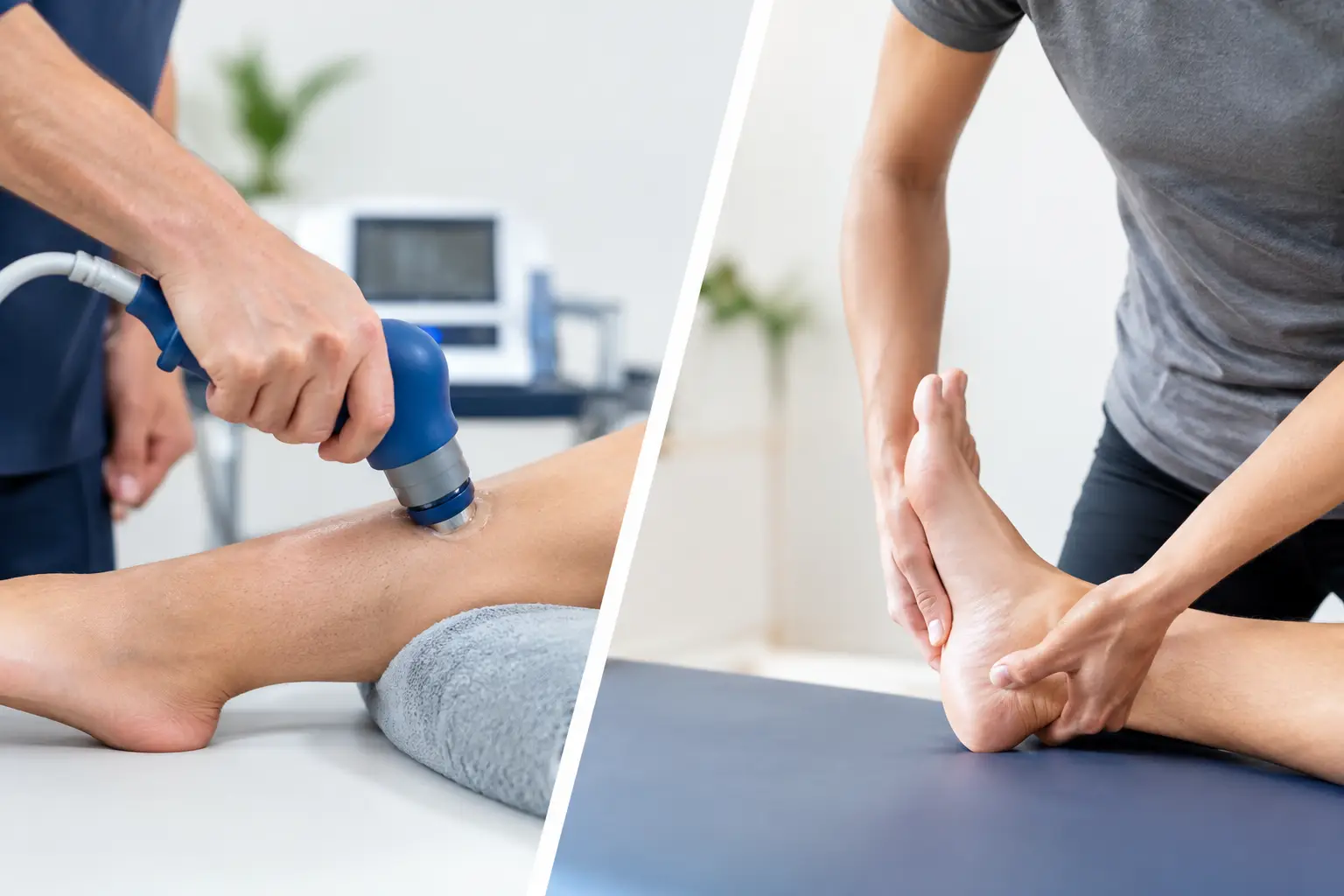
Shockwave Versus Physiotherapy for Tendons
A painful tendon can make a morning run, a tennis serve, or even reaching for a coffee mug feel far more complicated than it should. When comparing shockwave versus physiotherapy for tendons, the most useful question is rarely which treatment is “better.” It is which approach, or combination of approaches, best matches your tendon, symptoms, goals, and stage of recovery.
At Momentum Therapy, treatment begins with listening and assessing how your pain affects movement, work, sport, and everyday life. Tendon pain is not one-size-fits-all, and the plan should not be either.
Shockwave Versus Physiotherapy for Tendons: The Key Difference
Physiotherapy is an active, progressive approach to restoring tendon capacity. It may include a detailed movement assessment, hands-on treatment when appropriate, education about activity modification, and a structured exercise program to gradually strengthen the tendon and the muscles that support it.
Shockwave therapy, also called extracorporeal shockwave therapy or ESWT, is a non-invasive treatment that delivers acoustic pressure waves into the affected area. It is often considered for persistent tendon pain that has not improved as expected with rest or basic care. The goal is to stimulate a healing response and reduce pain sensitivity so you can move forward with rehabilitation.
They are not interchangeable treatments. Shockwave is a focused modality. Physiotherapy is the broader recovery process that addresses why the tendon became overloaded, how your body moves, and what needs to change for a lasting return to activity.
For many people, the strongest plan is not shockwave instead of physiotherapy. It is shockwave used strategically alongside a progressive physiotherapy program.
Why Tendons Need More Than Rest
Tendons connect muscle to bone. They transfer force every time you walk upstairs, lift a child, jump, type, grip, or push off during a run. When the load placed on a tendon repeatedly exceeds what it can currently tolerate, pain can develop.
This can happen suddenly after a change in training, but it also develops gradually. A runner may increase mileage too quickly. A recreational athlete may return to sport after time away. A worker may repeat the same lifting or gripping task for months. Sometimes the trigger is less obvious, such as reduced hip or calf strength, poor recovery, footwear changes, or a rapid shift in daily activity.
People often use the word “tendinitis,” which suggests inflammation. However, longer-standing tendon pain is frequently more complex than simple inflammation. In many persistent cases, the tendon has changes in its structure and its ability to tolerate load. That is why complete rest may settle symptoms temporarily but does not necessarily prepare the tendon for the demands that caused the problem.
A well-designed rehabilitation plan gradually reintroduces the right amount of load. The aim is not to avoid all discomfort forever. It is to build confidence and capacity without repeatedly flaring symptoms.
What Physiotherapy Can Do for Tendon Pain
Physiotherapy is usually the foundation of tendon rehabilitation because it helps turn pain relief into functional recovery. Your therapist will assess the painful area, but also the joints, muscles, movement patterns, and training habits that may be contributing to the issue.
For Achilles tendon pain, that could mean looking at calf strength, ankle mobility, running volume, and how you tolerate hills or speed work. For patellar tendon pain near the knee, it may involve assessing squatting, jumping, landing, hip strength, and sport-specific demands. With tennis elbow, your plan may include grip strength, wrist and forearm loading, shoulder control, and the repetitive tasks that keep aggravating the area.
Exercise is often the centerpiece. Depending on your presentation, this may start with isometric exercises, which involve holding a position to load the tendon without much movement. From there, your program can progress to slow resistance training, heavier strength work, and eventually sport- or work-specific tasks.
The right dose matters. Too little load may not create meaningful adaptation. Too much, too soon can leave the tendon irritable. A physiotherapist helps you find the productive middle ground and adjust the program as your symptoms and strength change.
Physiotherapy can also help you make practical decisions during recovery. You may not need to stop all activity. You may need to modify distance, reduce jumping volume, change how you lift, or schedule recovery more deliberately. These decisions can make the difference between a plan you can follow and one that disrupts your entire life.
Where Shockwave Therapy May Fit
Shockwave therapy may be a useful addition when tendon pain has been present for several months, continues to limit function, or has plateaued despite appropriate initial care. It is commonly considered for conditions such as Achilles tendinopathy, patellar tendinopathy, lateral elbow tendinopathy, and some shoulder tendon concerns.
During treatment, a clinician applies a handheld device to the target area. The sensation can be uncomfortable, especially over a sensitive tendon, but treatment intensity is adjusted to your tolerance. Sessions are brief, and a series of appointments is often recommended rather than a single treatment.
Shockwave should not be viewed as a quick fix that repairs a tendon overnight. Some people notice symptom changes early, while others improve gradually over weeks as they continue their exercise program. The benefit is often greatest when shockwave makes it easier to participate in the loading and movement work that supports long-term recovery.
There are trade-offs. Shockwave can cause temporary soreness, redness, or bruising around the treatment area. It may not be suitable for everyone, including people with certain medical conditions or specific concerns in the treatment area. Your provider should review your health history, medications, symptoms, and diagnosis before recommending it.
When Physiotherapy Alone May Be the Better Starting Point
If tendon pain is recent, clearly connected to a sudden increase in activity, and improving with sensible load modification, physiotherapy may be all you need. A targeted exercise program, guidance on activity, and gradual progression can be highly effective without adding another modality.
Physiotherapy is also the logical first step when the source of pain is uncertain. Not every ache near a tendon is a tendon problem. Joint irritation, nerve sensitivity, muscle strain, referred pain, or a more significant injury can feel similar. An assessment helps ensure treatment is directed at the right problem.
If there is a suspected acute tendon tear, significant weakness, a sudden loss of function, major swelling, or a “pop” at the time of injury, seek prompt medical assessment. Those symptoms need careful evaluation rather than simply pushing through exercises or booking shockwave treatment.
When a Combined Plan Makes Sense
A combined approach is often worth considering for chronic, stubborn tendon pain, particularly when you are motivated to return to running, sport, fitness, or demanding work. Shockwave may help reduce pain and improve tolerance, while physiotherapy provides the progressive loading plan that prepares you for the activities that matter to you.
The order and timing should be individualized. Someone with an irritable Achilles tendon may need a calmer starting phase and carefully selected strength work before adding higher-demand exercises. Someone with long-standing patellar tendon pain may be ready for a more intensive strength progression from the beginning. Your sport, schedule, previous injuries, sleep, stress, and recovery habits all matter.
A coordinated plan also prevents a common mistake: feeling better after a few treatments, then returning immediately to full training. Pain relief is encouraging, but tendon adaptation takes time. The goal is to use improved symptoms as an opportunity to build strength, not as a reason to skip the rebuilding process.
Choosing the Right Treatment for Your Goals
The best choice depends on the diagnosis, how long you have had symptoms, the tendon involved, your activity level, and what you have already tried. It also depends on your goal. Preparing for a race, returning to a physically demanding job, and getting through daily stairs without pain may require different progressions.
A thorough assessment can clarify whether shockwave therapy is appropriate, whether physiotherapy should be the primary focus, or whether combining both offers the best path forward. It can also identify contributing factors that are easy to overlook, from training errors and mobility limits to strength deficits and footwear choices.
Tendon recovery asks for patience, but it should not feel like guesswork. With the right plan, each step can move you closer to doing the activities you enjoy with more strength, confidence, and comfort.