
How to Ease Plantar Fasciitis Without Guesswork
That sharp first step out of bed can make a normal morning feel like a problem to solve. If you are wondering how to ease plantar fasciitis, the answer is rarely one stretch, one pair of shoes, or simply pushing through. Heel pain usually improves when you reduce irritation while steadily rebuilding your foot and calf’s capacity to handle walking, work, running, and exercise.
Plantar fasciitis is commonly felt as pain under the heel or along the arch. It is often most noticeable after rest, such as first thing in the morning or after sitting, then may ease as you move before returning later in the day. The plantar fascia is a thick band of tissue that supports the arch and helps transfer force through the foot. When its load exceeds what it can tolerate, it can become painful and sensitive.
How to Ease Plantar Fasciitis: Start With Smarter Loading
Complete rest can calm symptoms briefly, but avoiding all activity for weeks may leave the foot less prepared for everyday demands. The better approach is relative rest: temporarily adjust the activities that clearly flare your heel pain, while staying active in ways your symptoms tolerate.
For example, a runner may need to reduce mileage, hills, speed work, or back-to-back running days for a period of time. Someone whose job involves long hours on hard floors may benefit from more frequent movement breaks, supportive indoor footwear, and a gradual plan to build standing tolerance. Low-impact options such as cycling, swimming, or strength training may help you maintain fitness while the heel settles.
Use your next-morning symptoms as useful feedback. Mild discomfort that returns to baseline quickly may be manageable. Pain that becomes sharper, spreads, causes limping, or is noticeably worse the following morning is a sign that the previous day’s load was probably too much. This is not about avoiding discomfort forever. It is about finding the right starting point and progressing from there.
Support the Foot During Everyday Life
Footwear will not fix every case, but it can make a meaningful difference when your heel is irritated. Choose shoes with a stable base, enough cushioning for your comfort, and a secure fit through the heel and midfoot. Extremely worn-out shoes, unsupportive slippers, and prolonged barefoot walking on tile or hardwood can aggravate symptoms for many people, especially during a flare-up.
A supportive house shoe or sandal can be helpful if your first steps at home are the worst part of the day. Some people also find short-term relief from an over-the-counter insert or heel cup. However, an insert is not automatically the right answer. A device that feels good for one person may crowd the shoe, shift pressure to another area, or be unnecessary for someone else.
Custom orthotics may be considered when foot mechanics, training demands, recurring symptoms, or comfort in standard footwear call for more individualized support. They work best as part of a broader plan, not as a substitute for strengthening and load management.
Build Strength, Not Just Flexibility
Calf tightness can increase pull through the plantar fascia, so gentle calf mobility may be useful. Try a wall calf stretch with the back knee straight, then repeat with the back knee slightly bent to target a different portion of the calf. Hold a comfortable stretch for 20 to 30 seconds, rather than forcing the heel down or pushing into sharp pain.
But stretching alone is often not enough. The foot and calf need strength to absorb force with each step. A simple starting exercise is a controlled heel raise. Hold onto a counter, rise through both feet, pause briefly at the top, and lower slowly. If that is comfortable, progress over time by shifting more weight to the affected side.
Another option is a seated heel raise with a weight, backpack, or resistance through the knee. This can be a useful early-stage exercise if standing heel raises are too sore. Foot-strengthening drills, such as gently shortening the foot to lift the arch without curling the toes, may also improve control and awareness.
The right dosage depends on your current pain level and activity demands. Exercises should feel challenging, but they should not create sharp heel pain or a major next-day flare. A physiotherapist can help determine whether limited ankle mobility, calf weakness, hip control, training errors, or footwear are contributing to your symptoms.
Make Mornings Less Painful
The plantar fascia and calf can feel stiff after being still overnight. Before standing up, try moving the ankle up and down several times, making slow circles with the foot, and gently pulling the toes back toward the shin for a light stretch along the sole of the foot. Taking 60 seconds before the first step may reduce that familiar jolt of heel pain.
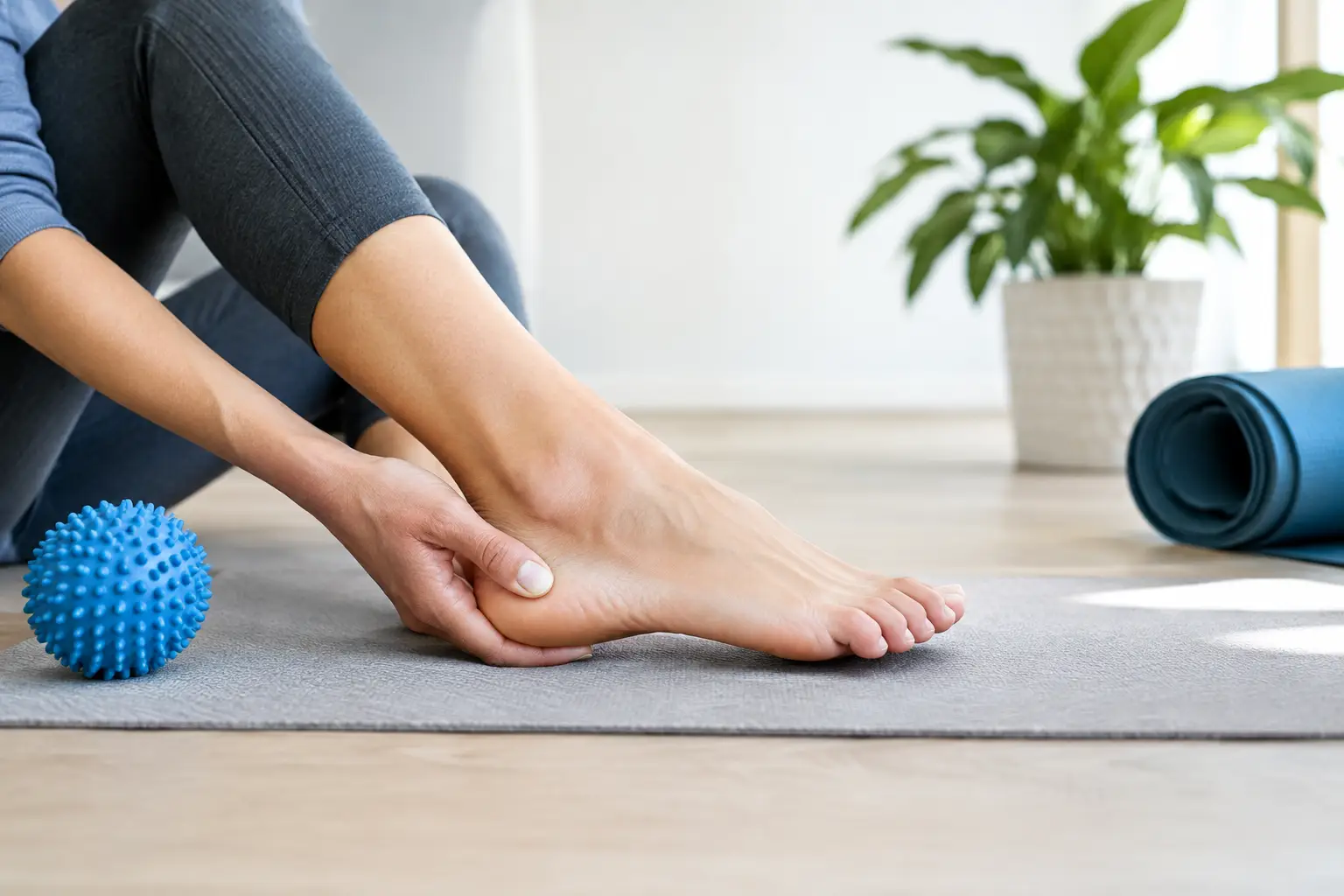
Rolling the bottom of the foot over a ball or a chilled water bottle can feel soothing for some people. Keep the pressure light to moderate. Aggressive rolling that leaves the heel more tender is counterproductive, and ice should be used for comfort rather than as the main treatment plan.
A night splint may be worth discussing if first-step pain remains a major issue despite other changes. It keeps the ankle and foot in a more lengthened position overnight, but it is not comfortable or necessary for everyone. Consistent use matters more than buying every device marketed for heel pain.
Know When Heel Pain Needs an Assessment
Not all heel pain is plantar fasciitis. Pain at the back of the heel, burning or tingling, significant swelling, a sudden pop, bruising, or pain that follows a specific injury may point to a different issue. Seek prompt medical assessment if you cannot bear weight, have signs of infection such as warmth and fever, experience numbness, or have pain that is severe and worsening.
It is also sensible to book an assessment when heel pain is not improving after several weeks of thoughtful self-management, keeps returning, or prevents you from working, exercising, or sleeping well. A clinician can assess walking mechanics, ankle range of motion, strength, footwear, and the way your symptoms respond to loading. That helps rule out other causes and prevents an overly generic treatment plan.
At Momentum Therapy, a coordinated plan may include physiotherapy-guided exercise, running assessment when training is part of the problem, manual therapy where appropriate, and custom orthotics or shockwave therapy for selected persistent cases. The best approach depends on your symptoms, goals, and how long the condition has been present. There is no prize for tolerating pain longer than necessary.
Return to Walking, Workouts, and Running Gradually
When symptoms begin to settle, it is tempting to make up for lost time. That is when many flare-ups happen. Increase one variable at a time: distance, speed, hills, time on your feet, or workout frequency. If you are returning to running, begin with a manageable route and pace, then give your heel a day or two to show how it responded before progressing.
For active adults, it can be helpful to keep strength work in the routine even once pain improves. A pain-free week does not always mean the tissue is fully ready for a sudden jump in activity. Consistent calf and foot strength, sensible training changes, and shoes that suit the activity provide a more reliable foundation than chasing a quick fix.
Heel pain can be frustrating because recovery is usually gradual, not dramatic. Start with the changes you can repeat every day, listen to your next-morning symptoms, and get personalized guidance when progress stalls. With a clear plan and steady progression, each step can become more comfortable and more confident.