
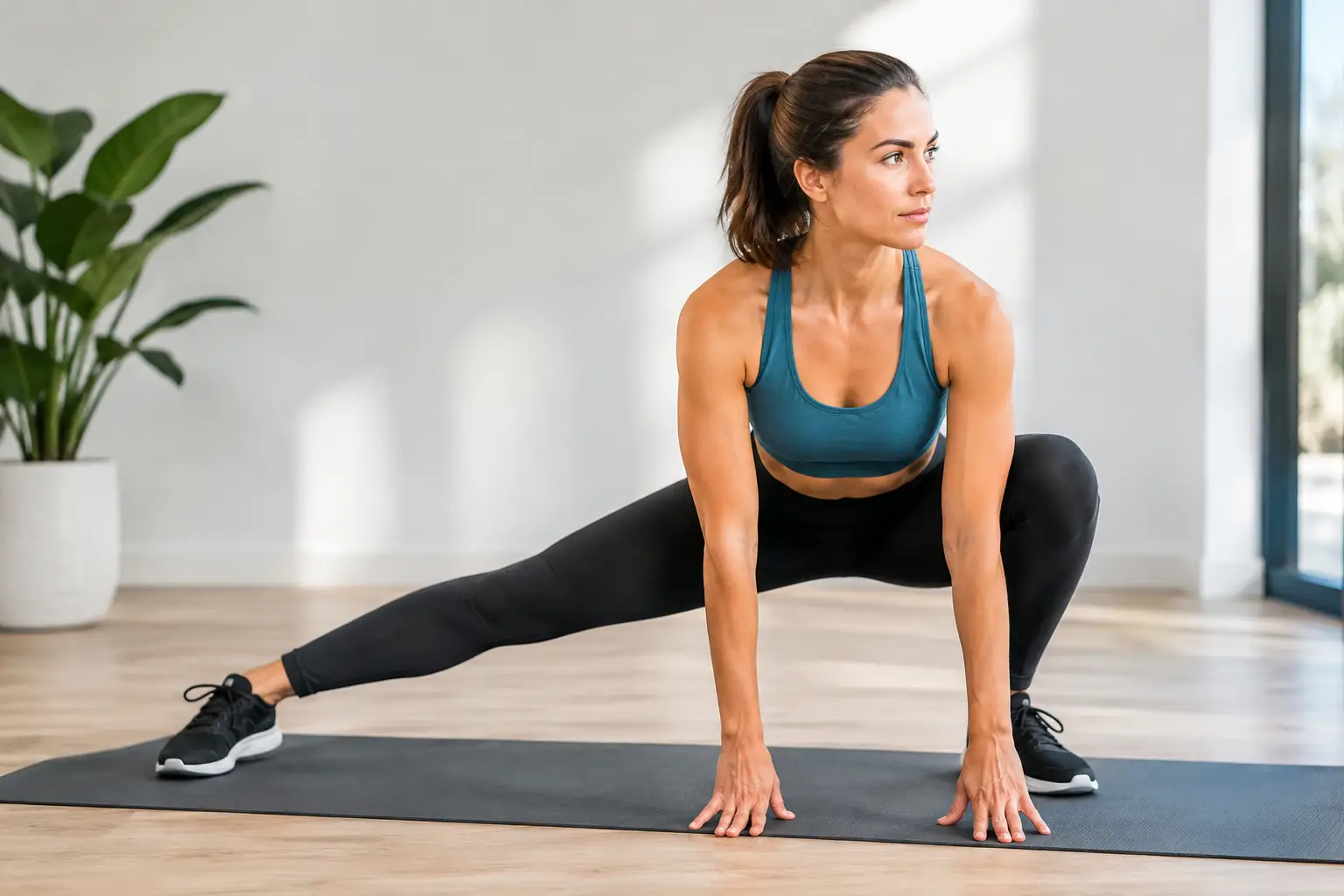
10 Top Mobility Exercises for Better Movement
A stiff hip when you get out of the car, a shoulder that feels restricted during overhead presses, or ankles that limit your squat depth can change how you move long before pain becomes your main complaint. The right top mobility exercises can help you restore usable motion, improve joint control, and feel more confident in everyday activity, sport, and training.
Mobility is more than flexibility. Flexibility describes how far a muscle can lengthen; mobility is your ability to actively control movement through a joint’s available range. That distinction matters. Reaching a position passively is useful, but being strong and stable in that position is what supports safer lifting, running, reaching, and changing direction.
How to get more from mobility work
Start with controlled, comfortable movement rather than forcing a deep stretch. A mild sense of tension is often fine. Pinching, sharp pain, numbness, catching, or symptoms that travel down an arm or leg are signals to stop and get assessed.
For most people, 5 to 10 minutes of focused mobility work three to five days per week is more productive than one long session done occasionally. Choose movements that match your needs. A desk worker may benefit most from thoracic spine, hip, and shoulder work, while a runner may prioritize ankle, hip, and calf mobility.
Move slowly enough that you can breathe normally and avoid compensating. If your lower back twists during a hip drill or your ribs flare during a shoulder drill, reduce the range and regain control. Quality comes before depth.
10 top mobility exercises to build into your routine
1. Cat-cow for spinal motion
Begin on your hands and knees with your hands under your shoulders and knees under your hips. Exhale as you gently round through your spine, allowing your head to follow naturally. Then inhale and slowly lengthen into the opposite direction without dropping heavily into your low back.
Perform 6 to 10 smooth repetitions. This is an effective morning option for general spinal stiffness, but keep the movement comfortable if you are recovering from a recent back flare-up.
2. Open books for thoracic rotation
Lie on your side with your hips and knees bent, arms extended in front of your chest. Keep your knees together as you slowly sweep your top arm across your body, rotating through your upper back. Let your eyes follow your hand, then return with control.
Aim for 6 to 8 repetitions per side. Thoracic rotation can be especially helpful for people who sit for long periods, golfers, tennis players, and anyone who feels limited when turning to look behind them.
3. Wall shoulder slides
Stand with your back against a wall, feet slightly forward, and your ribs gently stacked over your pelvis. Place your forearms against the wall and slide them upward only as far as you can without shrugging or arching your lower back. Pause briefly, then slide down.
Try 8 controlled repetitions. This drill encourages shoulder elevation with better upper-back and ribcage positioning. If a wall position feels too restrictive, a clinician can help determine whether the limitation is coming from the shoulder, neck, upper back, or movement strategy.
4. Controlled shoulder circles
Stand tall and make a slow circle with one straight arm, moving it forward, overhead, behind you, and back to the start. Use a range that feels smooth, not forced. Keep your torso still rather than leaning or twisting to make the circle larger.
Complete 3 to 5 circles in each direction per arm. Shoulder circles are simple, but they can reveal asymmetries in control and comfort. They work well as part of a warm-up before swimming, racquet sports, strength training, or physical work.
5. 90/90 hip switches
Sit on the floor with both knees bent and your feet wider than hip-width apart. Drop both knees to one side, creating a 90-degree shape at each leg as comfortably as possible. Use your hands behind you for support if needed, then slowly switch to the other side.
Perform 6 to 10 switches total. This exercise targets hip rotation, which matters for squatting, running mechanics, getting in and out of a vehicle, and changing direction. Do not force the knees toward the floor. Your available range may improve gradually with consistent practice.
6. Half-kneeling hip flexor rock
Kneel with one knee on a cushion or mat and the other foot planted in front. Gently tuck your pelvis as if bringing your belt buckle slightly upward, then shift forward a small amount while keeping your torso tall. You should feel tension at the front of the kneeling-side hip, not compression in your low back.
Hold for two to three breaths, release, and repeat 5 times per side. This can be useful after prolonged sitting, but the key is pelvic control, not a dramatic lunge.
7. Adductor rock-backs
Start on hands and knees, then extend one leg straight out to the side with the foot flat or toes pointing forward. Keep your spine long as you slowly rock your hips back toward your heel, then return forward. You should feel a manageable stretch through the inner thigh of the extended leg.
Do 8 repetitions per side. Adductor mobility supports comfortable lateral movement, deep squatting, skating, and field sports. Keep the range modest if you have a history of groin strain or feel any sharp pulling.
8. Knee-to-wall ankle mobilization
Face a wall and place one foot a few inches away, with your heel staying down. Drive your knee forward toward the wall in line with your second or third toe, then return to the start. Adjust your distance so the movement is challenging but controlled.
Perform 8 to 12 repetitions per side. Limited ankle dorsiflexion can affect squat depth, stair descent, running stride, and landing mechanics. If your heel lifts, move closer to the wall rather than forcing the motion.
9. Calf raises with a slow lower
Stand near a wall or counter for balance. Rise onto the balls of both feet, pause at the top, then lower slowly for three seconds. Keep pressure even through the big toe and avoid rolling your ankles outward.
Complete 8 to 15 repetitions. This is not a mobility drill in the traditional stretching sense, but active calf strength through range helps you use the ankle motion you are trying to improve. It is particularly valuable for walkers, runners, and court-sport athletes.
10. Deep squat hold with support
Hold a sturdy doorframe, countertop, or squat rack post for balance. Lower into a squat depth that feels comfortable, allowing your knees to travel in line with your toes. Use the support to keep your chest tall and your heels grounded, then gently shift side to side or take a few calm breaths.
Stay for 15 to 30 seconds and repeat two or three times. This drill combines ankle, hip, and trunk mobility, but it is not essential for everyone. If deep squatting creates knee, hip, or back pain, choose a pain-free depth or seek individualized guidance.
Put your mobility routine to work
Mobility work is most effective when it supports a movement you want to improve. Before a run, use ankle mobilizations, hip switches, and calf raises. Before upper-body training, try open books, wall slides, and shoulder circles. After a day at a desk, cat-cows, hip flexor rocks, and a supported squat may help you reset without turning your evening into another workout.
Progress does not always mean pushing farther. Sometimes the meaningful change is less stiffness after sitting, smoother squat mechanics, a more comfortable overhead reach, or confidence returning to a favorite activity. Pair mobility drills with strength training when possible, since strength helps make new range of motion useful in real life.
If stiffness keeps returning, one side feels substantially different, or mobility loss is affecting work, sleep, sport, or daily activities, a personalized assessment can identify what is driving the restriction. At Momentum Therapy, coordinated care can combine hands-on treatment, exercise guidance, and a progressive rehabilitation plan designed around your goals. Small, consistent movements can be a strong first step toward feeling better in your body.